Transport Canada Drone Security Regulations: What Enterprise Site Managers Need to Know
Beyond visual line of sight, night operations, dock installations and liability. The regulatory questions a site manager should ask before any drone program begins.
Site managers evaluating an autonomous drone security program eventually arrive at the same question: who is responsible if something goes wrong in the air over my property? The answer sits almost entirely with the operator, which is exactly why the operator's compliance posture is the thing worth scrutinizing during procurement.
This is a practical overview for facilities, industrial and institutional buyers in Canada. It is not legal advice, and requirements change. Confirm current obligations with Transport Canada and with your own counsel before deployment.
The permit landscape in plain terms
Commercial drone operations in Canada fall under the Canadian Aviation Regulations. Advanced operations, which include nearly everything a security program needs, require the operator to hold the appropriate certificate and to operate within defined conditions. Pilots flying those missions hold their own certification.
When you buy a security patrol service, you are not the operator. The company flying the aircraft is. Standard practice is for that company to provide its certification details, its pilot credentials and its insurance documentation as part of the contract package.
Beyond visual line of sight is the deciding factor
The single most consequential classification for a security program is whether the aircraft is flown within visual line of sight of a pilot or observer. A permanently installed docking station on a remote site is by definition operating without a person watching it, which places the operation in beyond visual line of sight territory.
That is the correct place for the question to be asked in a procurement conversation. Ask directly: is this specific installation, at this site, operating under an authorization that covers beyond visual line of sight flight? A vague answer here should end the conversation.
Night operations
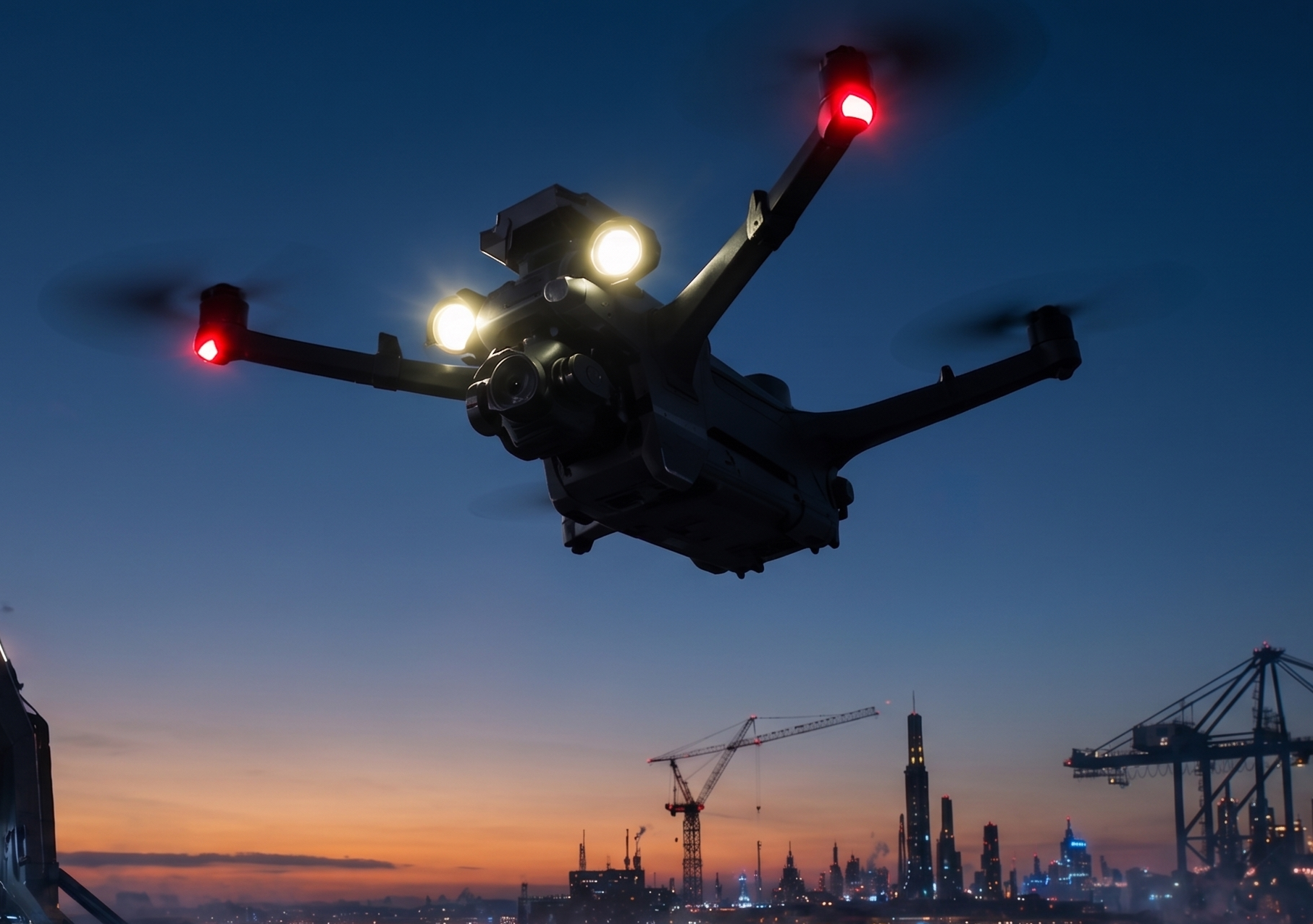
Night patrol is where most of the security value sits, and night flight carries additional conditions. Thermal and low-light sensors solve the sensing problem. The regulatory conditions around lighting, visibility and airspace at night are separate and must be satisfied by the operator.
For a buyer, the practical outcome is a mission profile designed around the requirement rather than an aircraft flown whenever convenient.
Docks installed on commercial infrastructure
A DJI Dock 3 installation is a permanent physical change to a site. Practical items usually surface during facilities review rather than aviation review:
- ›Power and network provisioning at the dock location, and who owns the connection.
- ›Ground anchoring and snow load, particularly in prairie and northern installations.
- ›Physical security of the dock itself, including tamper detection and notification.
- ›The launch corridor, and who is responsible for keeping it clear.
The dock is also a piece of equipment: it needs scheduled inspection, firmware management and battery care. Confirm in writing that maintenance sits with the operator rather than with your facilities team.
Liability, records and privacy
Aerial imaging captures more than your property. Fences, adjacent land, public roads and in some cases neighbouring buildings will be in frame. A professional operator plans missions to limit incidental capture, maintains a retention policy for footage, and can describe how evidence is stored and who can access it.
On liability, ask for the certificate of insurance and check that the operation is actually named on it. Ask how incidents are logged and reported, and confirm flight records are retained for the period your own risk team requires.
What to put on the procurement checklist
- ›Operator certification and pilot credentials in writing.
- ›Beyond visual line of sight authorization for the specific installation.
- ›Night operations covered by the operating conditions.
- ›Insurance certificate naming the operation and the limits.
- ›Maintenance ownership and response times for the dock and aircraft.
- ›Image retention, access and deletion policy.
Next step
We are happy to walk a facilities or risk team through how an autonomous program is structured, what the operator carries, and what remains with the site.
Request a consultation and we will provide the compliance documentation for your review process.
Design a Program for Your Site
Tell us about your property, coverage gaps, and response requirements. We will map a fully autonomous patrol and inspection program to it.
Request a Consultation